
Marine and Bunker Fuels
Koehler Instrument Company is proud to offer a wide variety of products for your marine fuel testing needs!
All products on this page conform to tests within ISO 8217 Marine Fuel specifications.
Koehler Instrument Company’s line of analyzers for the marine and bunker fuels can be used to test for quality and a wide range of characteristics of both fuels and lubricants. Please inquire with your Koehler Sales Representative to learn more about our marine and bunker equipment and how they can provide a solution for your specific application. You can also click a product image below to find detailed specifications on each of the products you see listed here.
Products
K77000
|
|
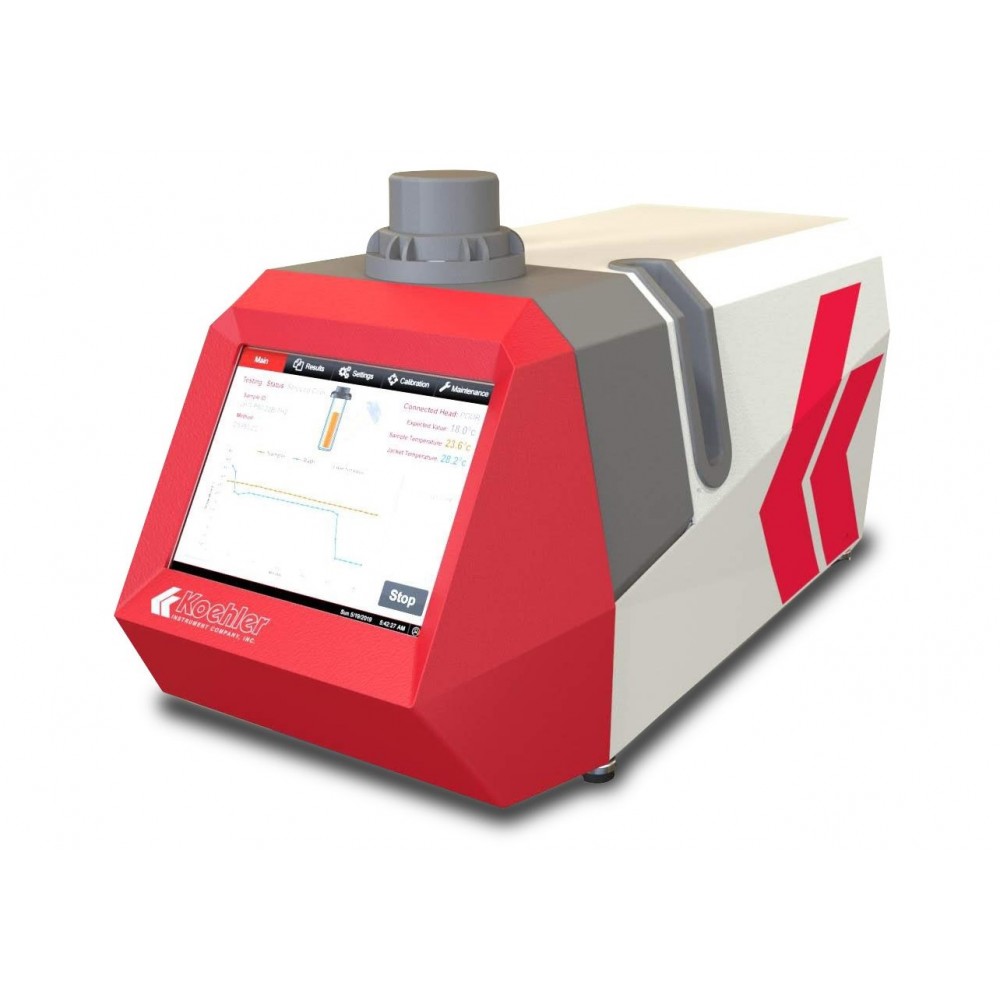
Automatic Cloud and Pour Point AnalyzerThe Automatic Cloud and Pour Point Analyzer is a state of the art piece of equipment for measuring cloud point by optical detection and pour point with automatic tilt. The cloud point is an index of the lowest temperature of a petroleum product or a biodiesel fuel’s utility for certain applications. Wax crystals of sufficient quantity can plug filters used in some fuel systems. The pour point of a petroleum product is an index of the lowest temperature of its utility for certain applications. Flow characteristics, such as pour point, can be critical for the correct operation of lubricating oil systems, fuel systems, and petroleum blending and pipeline operations |
K71000 |
|
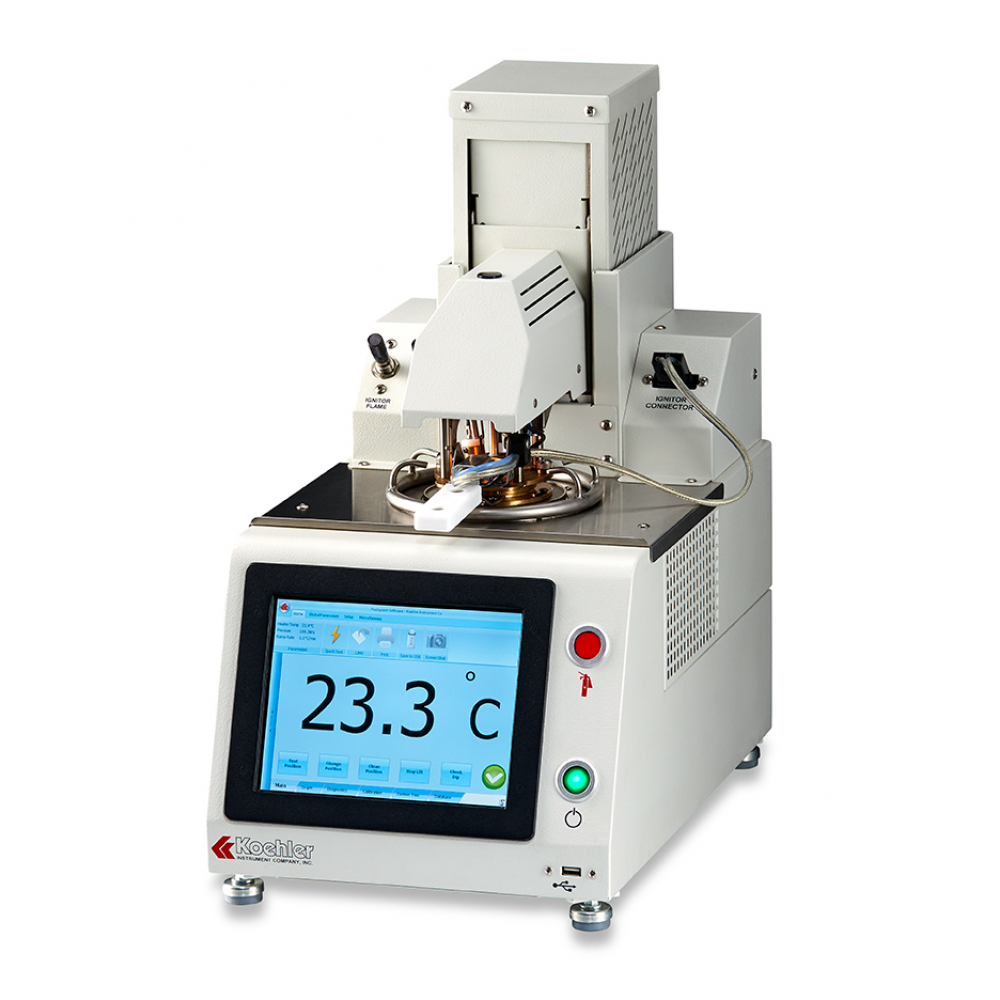
Automatic Pensky-Martens Closed Cup Flash Point TesterThe Automatic Pensky-Martens Closed Cup Flash Point Analyzer represents a perfect union of next-generation technology with traditional robust quality. The system software runs on an integrated processor PC running the latest Windows operating system. The 8.4” touch screen interface fully displays all operator parameters and results on a single screen. A three (3) position mechanical lift system for the cover and motor assembly is fully automated and software selectable: Open – Clean – Test for one touch positioning of the test cup. The instrument comes standard with two flash detector systems including a thermocouple and ionization ring detection. |
K23900 |
|
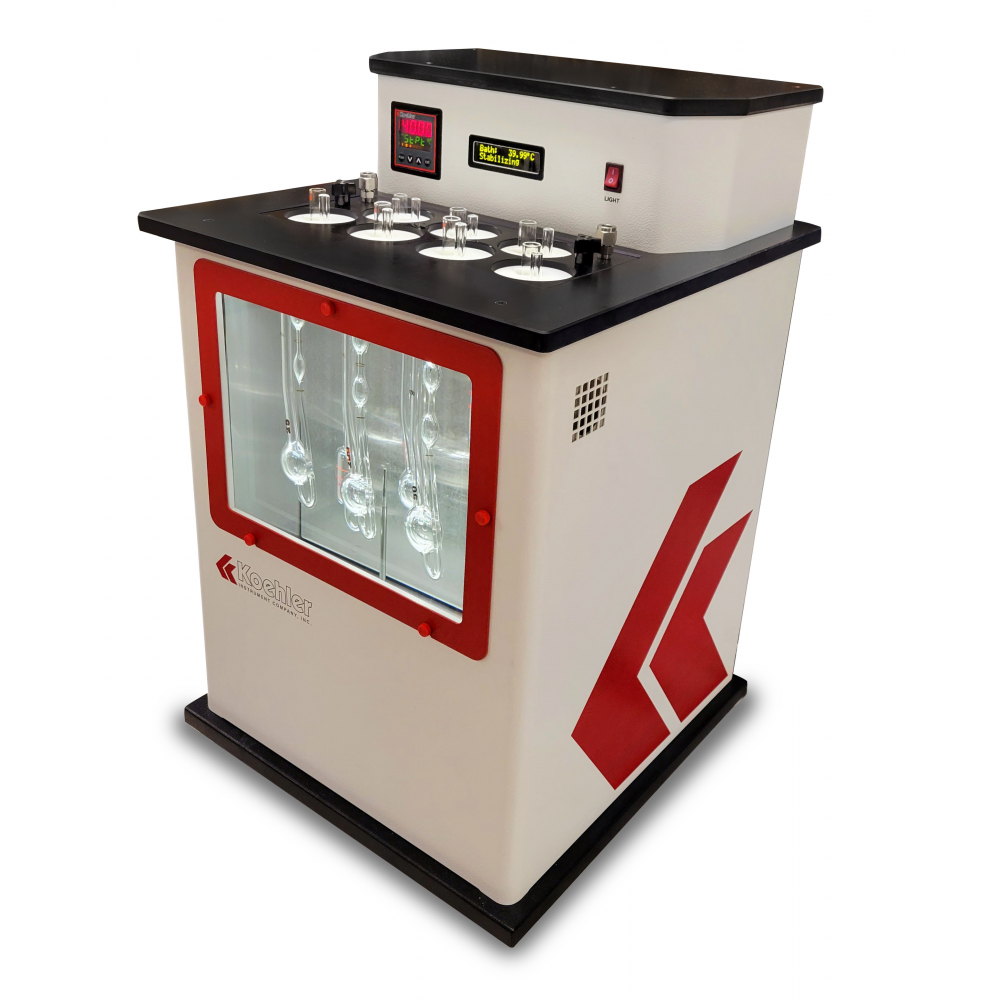
Kinematic Viscosity BathKinematic viscosity is of primary importance in the design and selection of a wide range of petroleum products. Calibrated capillary viscometers are used to measure flow under gravity or vacuum at precisely controlled temperatures. Constant temperature bath with advanced temperature control circuitry for convenient, accurate glass capillary viscometry determinations. Microprocessor PID circuitry assures precise, reliable temperature control within ASTM specified stability and uniformity throughout the operating range of the bath. Simple push-button controls and dual digital displays permit easy setting and monitoring of bath temperature. Baths accommodate seven glass capillary viscometers of various types. |
K12200
|
|
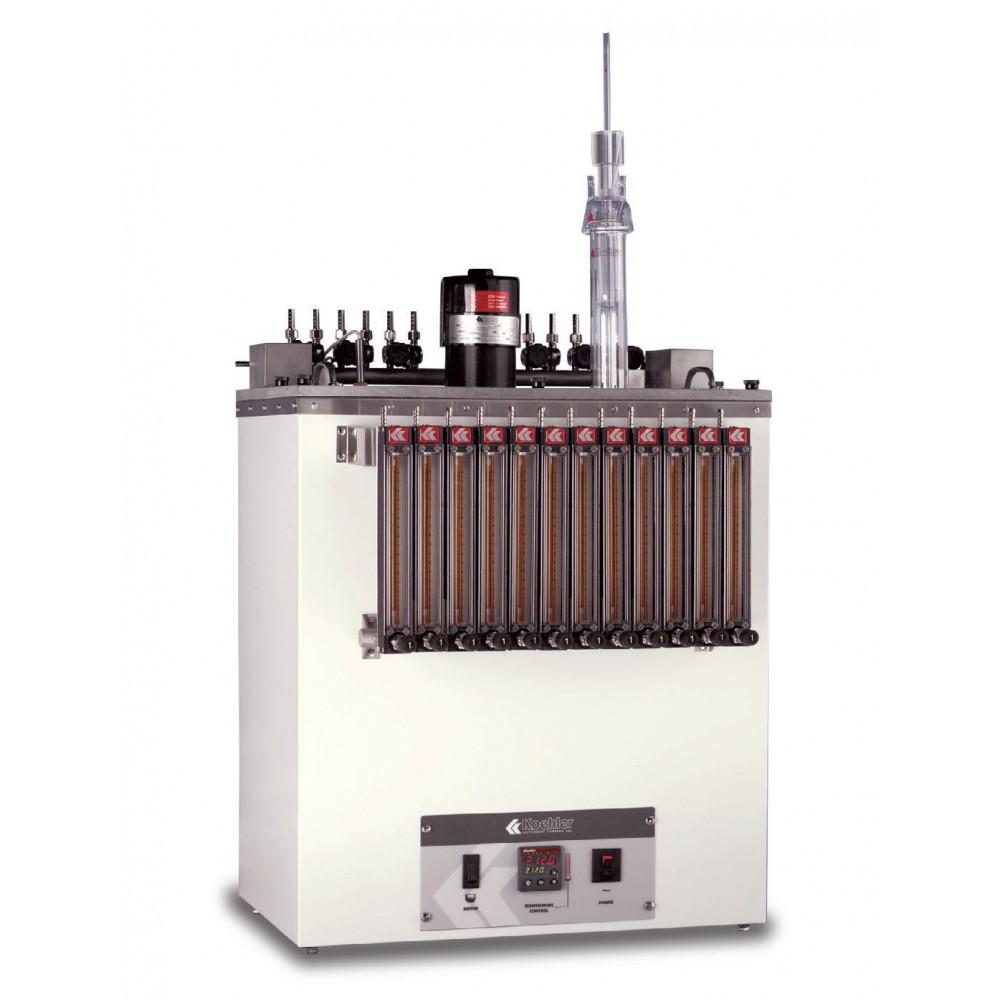
Oxidation Stability Apparatus, 8-Place and 12-Place BathThe 8 and 12-unit oxidation baths evaluate the oxidation stability by subjecting the sample to a temperature of 95°C in the presence of oxygen or dry air. For inhibited mineral oils, the sample is reacted with oxygen in the presence of water and an iron-copper catalyst. Additional units for thirty and sixty place baths are available for high-volume testing requirements. |
K86200
|
|
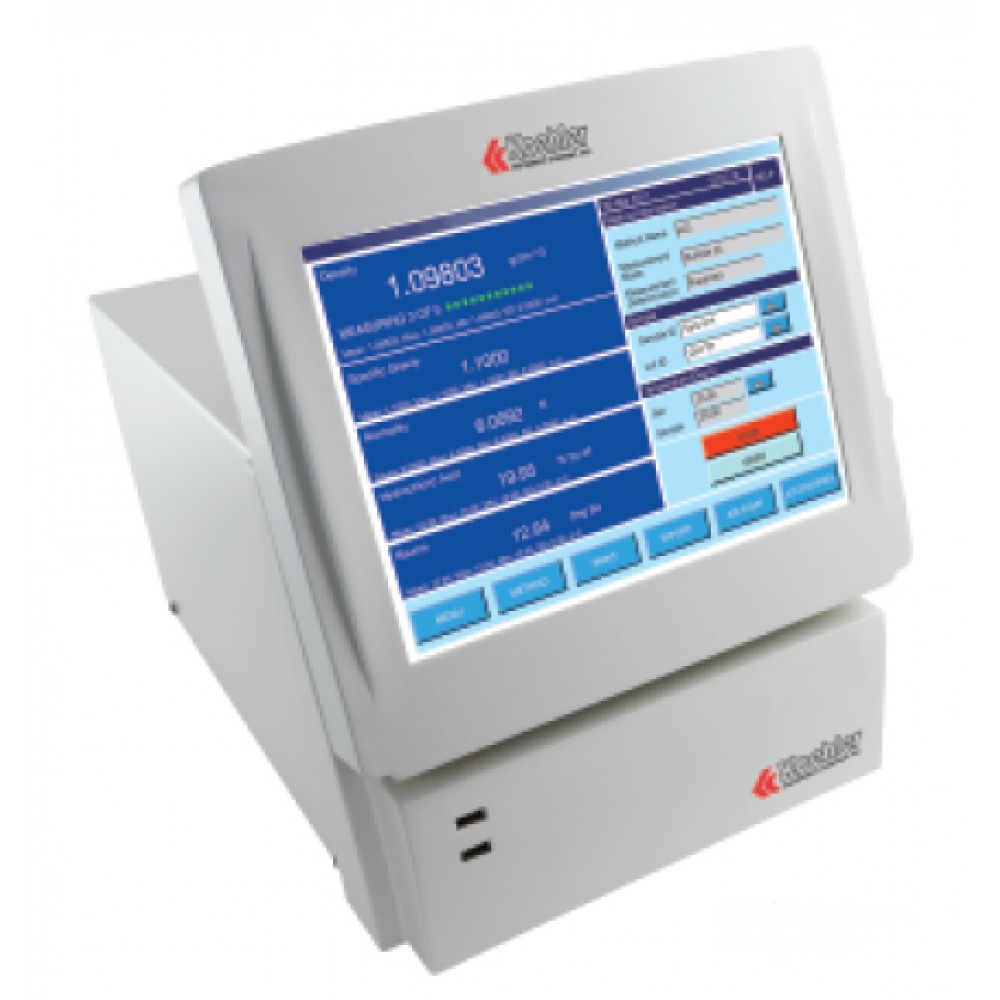
Automatic Density MeterDensity is a fundamental physical property that can be used in conjunction with other properties to characterize the quality of crude oils, light and heavy fractions of petroleum and petroleum products. The test method covers the determination of the density or relative density of crude oils, petroleum distillates and viscous oils that can be handled in a normal fashion as liquids at test temperatures between 15 and 35°C. |
K47925 |
|
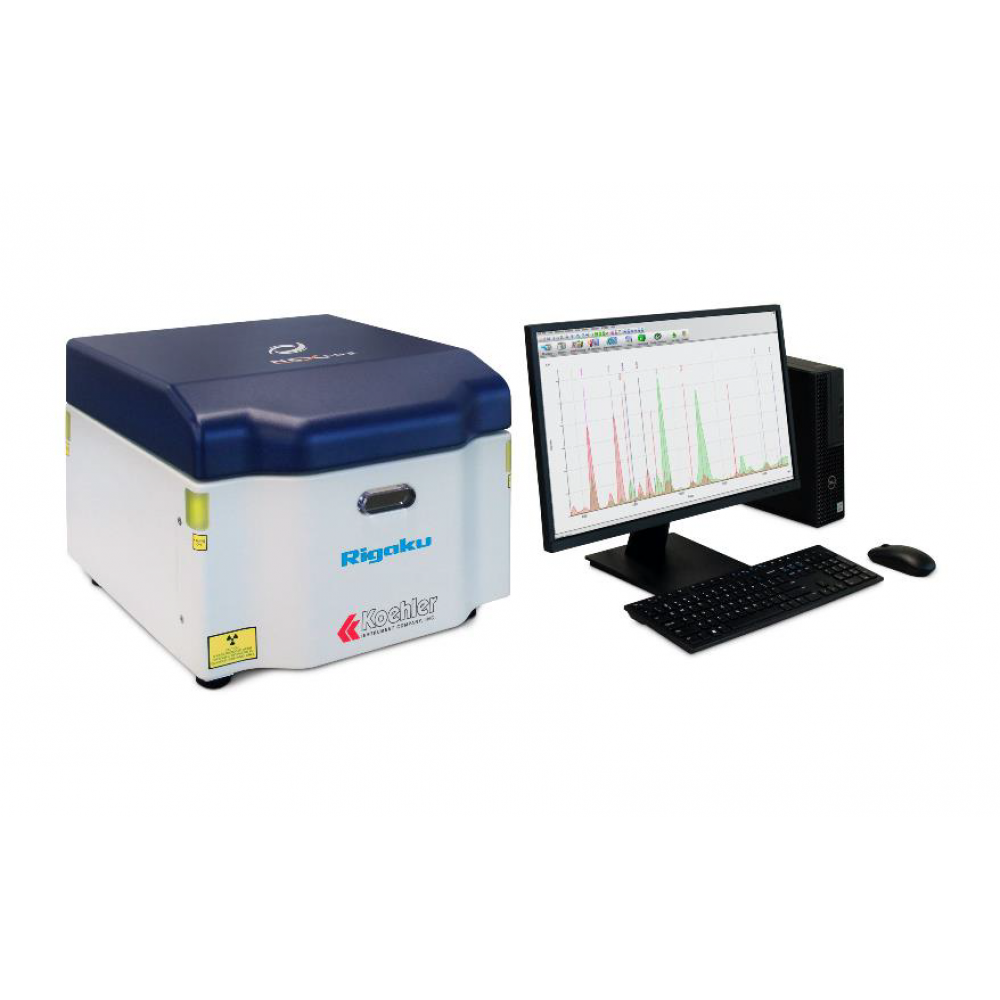
EDX3500 Benchtop EDXRF Elemental AnalyzerThe EDXRF can analyze a large array of elements from 11Na to 92U in solids, liquids, alloys, powders and thin films. This Advanced model delivers rapid qualitative and quantitative determination of major and minor atomic elements in a wide variety of sample types. The Silicon Drift Detector (SDD) provides superior data quality and the multiple automated tube filters enhance sensitivity. A polarized excitation is used for lower detection limits. |
K90500
|
|
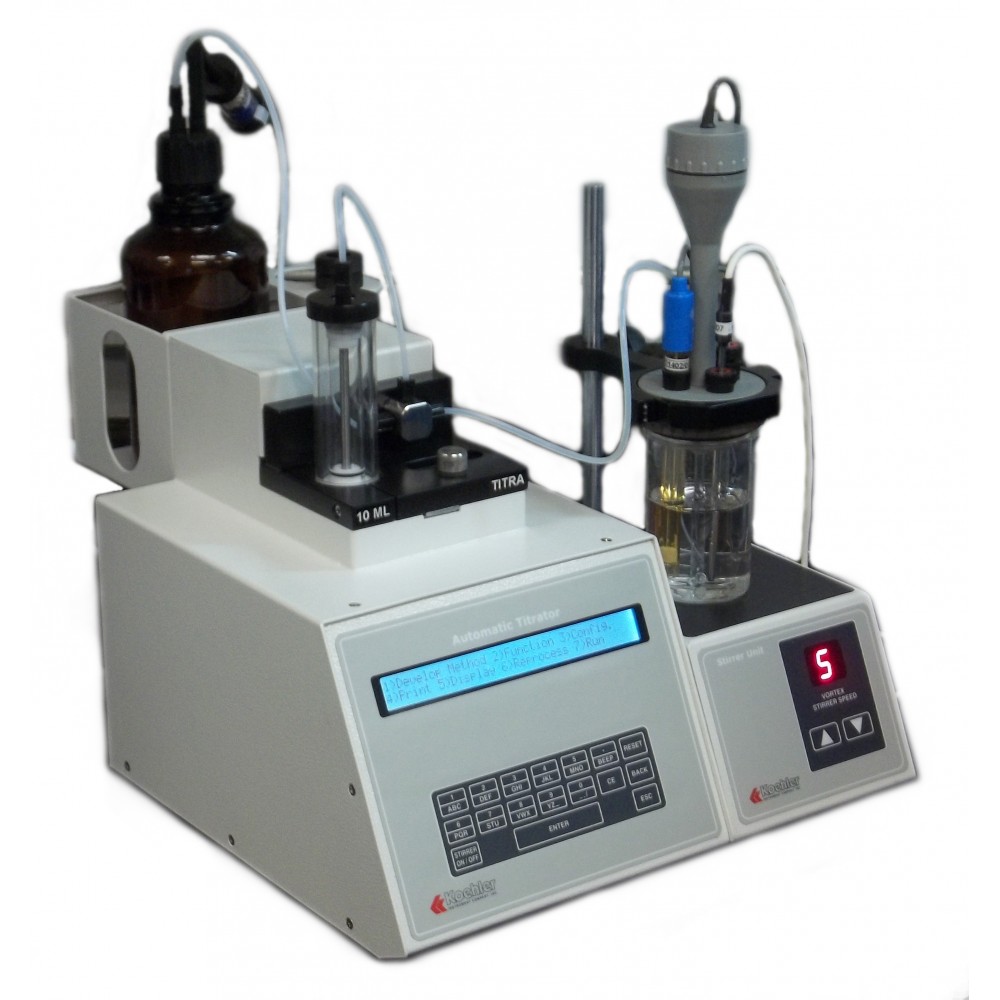
Automatic Potentiometric TitratorTitration is the fundamental chemical analysis procedure whereby the concentration of a chemical substance in solution is determined by reacting it with a measured amount of another chemical. The Automatic Titrator performs this analysis using a motor driven dispenser, stirred reaction vessel and electrodes which sense the completion of reaction by measuring the potential difference between two electrodes. Automatic titration increases accuracy, repeatability and reproducibility as well as minimizing errors in calculation and documentation. |
K48310
|
|
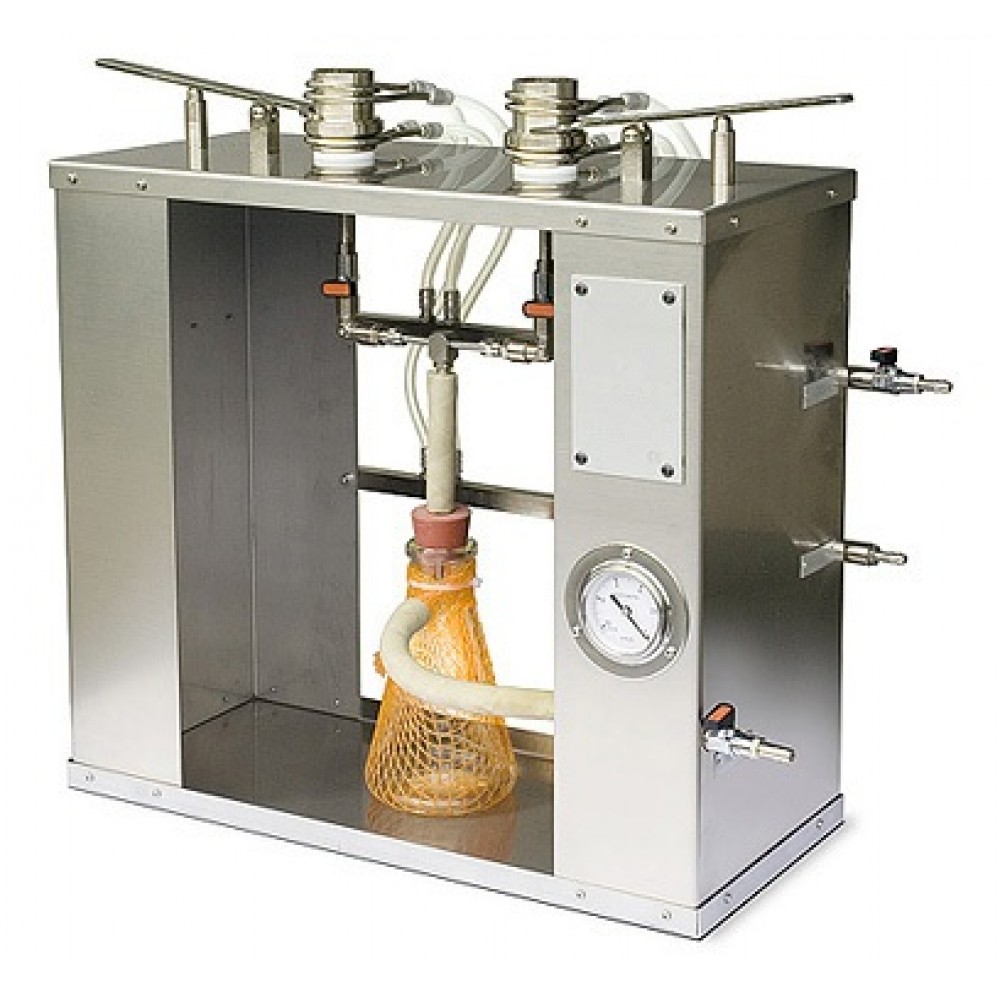
Total Sediment TesterThis unit is for the determination of total sediment up to 0.40% m/m for distillate fuel oils containing residual components and to 0.50% m/m in residual fuel oils having a maximum viscosity of 55 cSt (mm2/s) at 100°C. Some fuels can exceed the maximum filtration time specified in this test method due to factors other than the presence of significant quantities of insoluble organic or inorganic material. This test method can be used for the assessment of total sediment after regimes of fuel pretreatment designed to accelerate the aging process. |
K93495 |
|
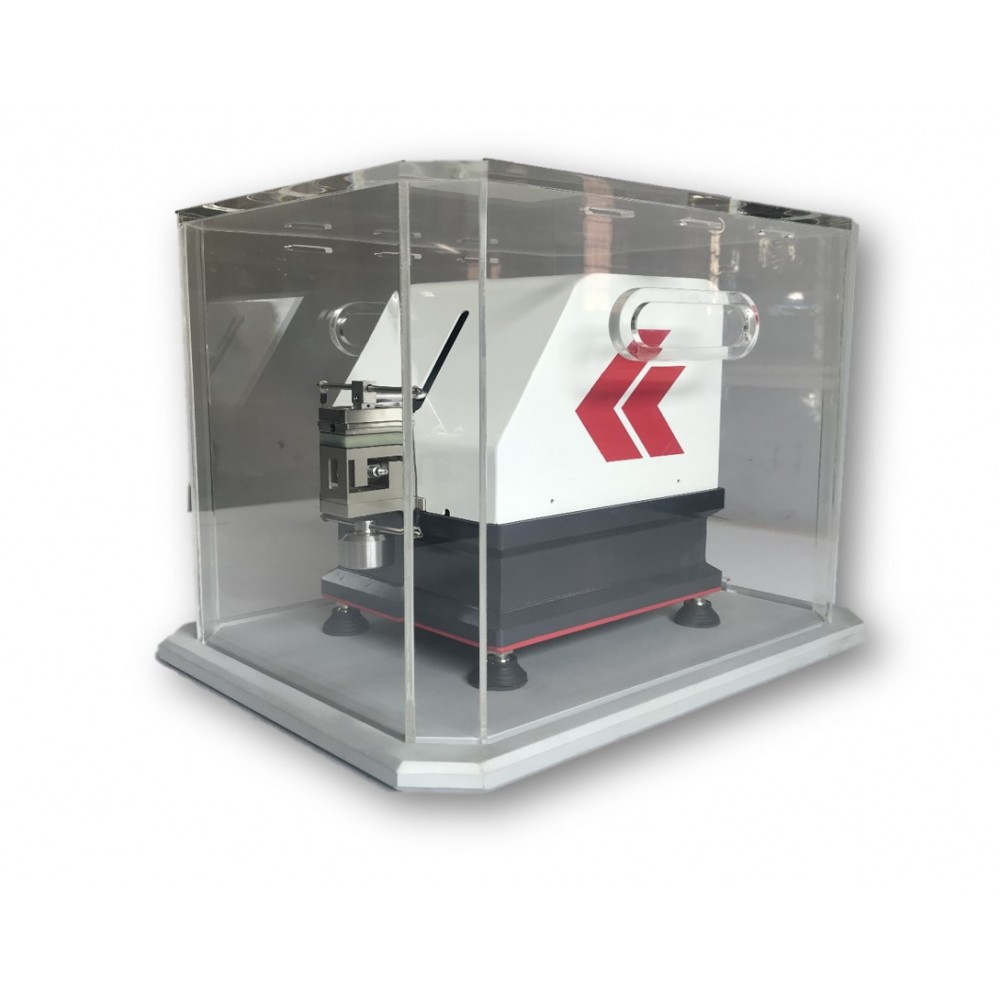
High Frequency Reciprocating Rig (HFRR)The High Frequency Reciprocating Rig is a versatile computer controlled apparatus for evaluation of the coefficient of friction and wear properties of materials under dry and lubricated conditions. Reciprocation motion occurs between the fixed stationery counter surface material mounted on a small lubricant bath and reciprocating specimen (ball) frequency, displacement, normal load are selected according to test requirement. |
K31830 |
|
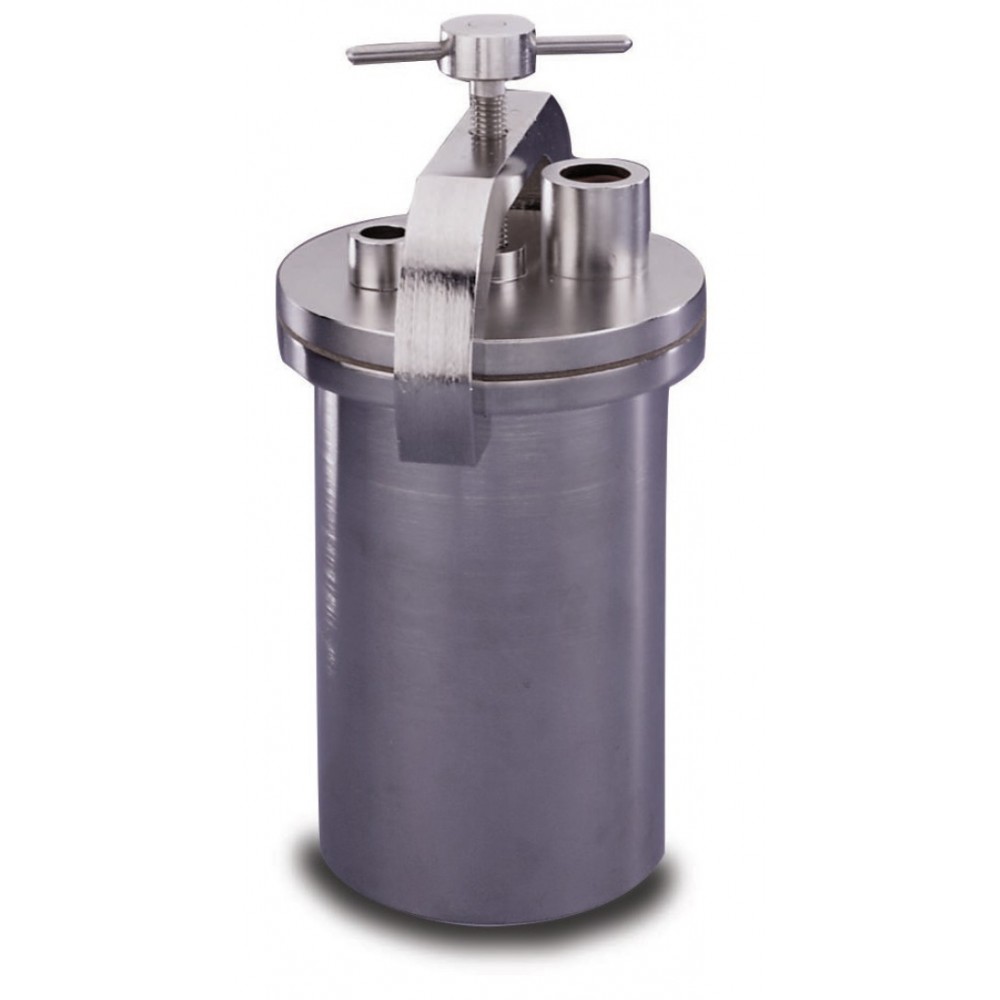
Dean & Stark ApparatusThe Dean & Stark apparatus determines the water content in petroleum products, tars, emulsified asphalts and other bituminous materials by the distillation method. |
K41100 |
|
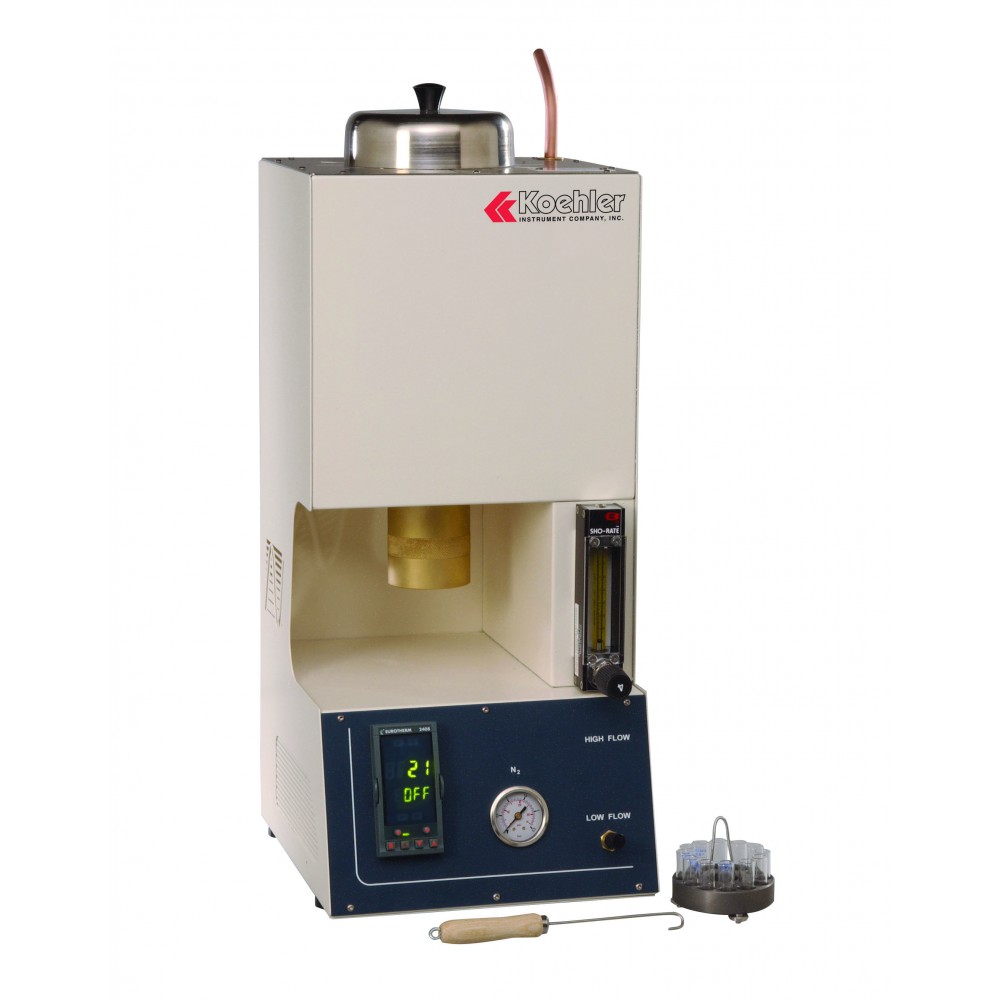
Micro Carbon Residue TesterThe Micro Carbon Residue tester determines the amount of carbon residue formed after evaporation and pyrolysis of petroleum materials under certain conditions and is intended to provide some indication of the relative coke forming tendency of such materials. |
K41091 |
|
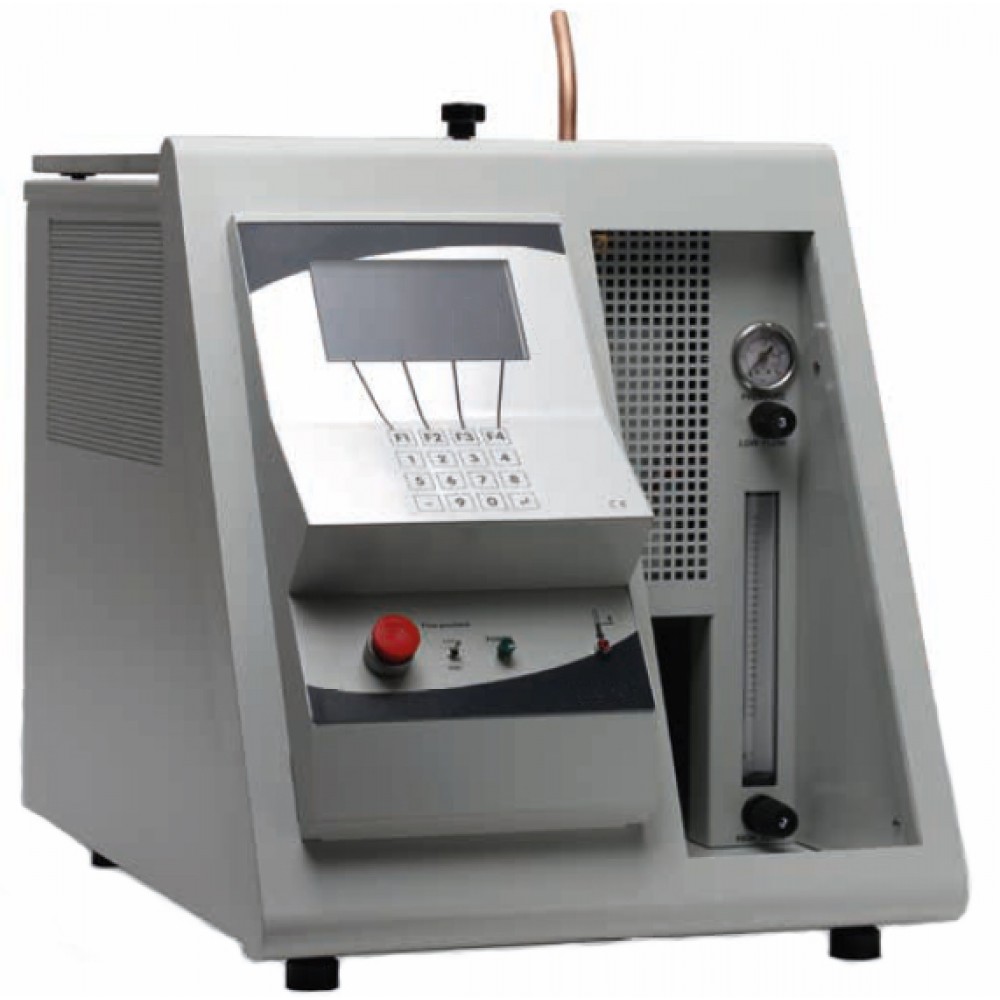
Micro Carbon Residue TesterThe Micro Conradson Carbon Residue and Ash Tester determines the amount of carbon residue formed after evaporation and pyrolysis of petroleum materials under certain conditions and is intended to provide some indication of the relative coke forming tendency of such materials. |